How to Cancel a Power of Attorney in India
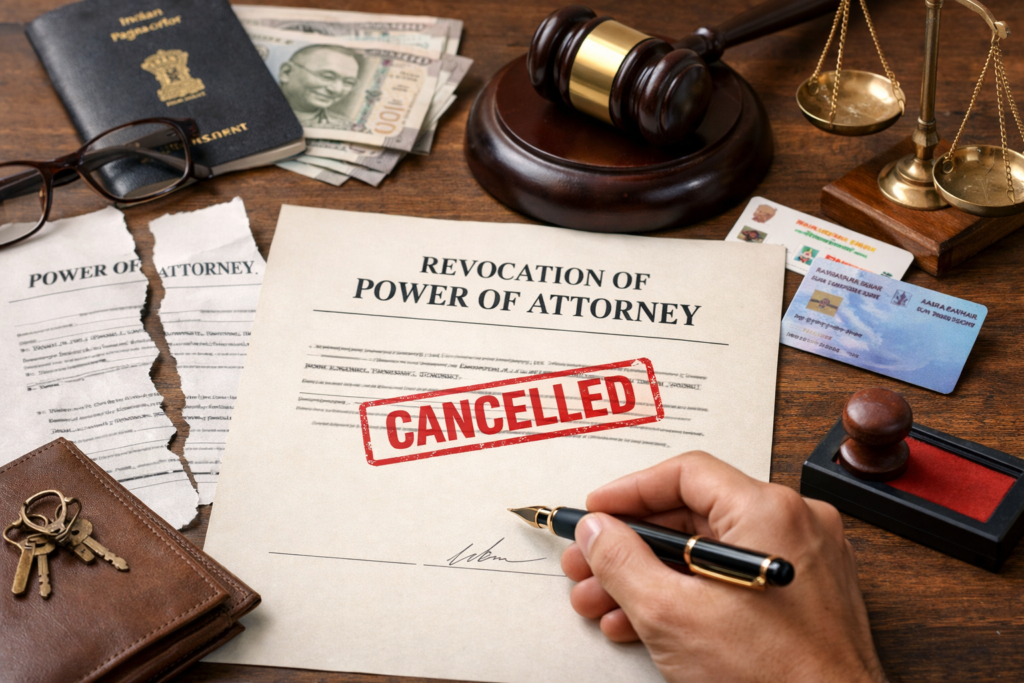
What is the Cancellation of Power of Attorney?
Cancellation of a Power of Attorney refers to the legal process of revoking the authority granted to an agent by the principal. Once cancelled, the agent no longer has the right to act on behalf of the principal in any matter covered under the PoA.
The cancellation must be done formally to ensure legal validity. Simply informing the agent verbally is not sufficient in most cases. Proper documentation and communication are required to prevent future disputes or unauthorised actions. The legal effect of cancellation is that all powers granted under the PoA come to an end from the effective date mentioned in the revocation.
Also Read – What are the Types of Power of Attorney?
When Can a Power of Attorney Be Cancelled in India?
A Power of Attorney can generally be cancelled by the principal under various situations, provided it is not legally restricted.
- When the principal chooses to revoke it
The principal has the right to cancel a PoA at any time, especially if it is revocable in nature and no legal restrictions apply. - When the purpose of the PoA is completed
Once the specific purpose for which the PoA was created is fulfilled, it can be cancelled as it is no longer required. - When there is misuse or breach by the agent
If the agent acts against the interest of the principal or misuses authority, the PoA can be revoked to prevent further damage. - Upon death, insolvency, or incapacity
A Power of Attorney automatically becomes invalid if the principal or agent dies, becomes insolvent, or is legally incapacitated. - When both parties agree to revoke it
In some cases, the principal and agent may mutually agree to cancel the PoA through proper documentation.
Under general contract law principles, revocation rights exist unless specifically restricted by law.
Also Read – What is General Power of Attorney?
When Can a Power of Attorney Not Be Cancelled?
There are certain situations where the cancellation of power of attorney is restricted under law, and the principal cannot revoke it freely. These exceptions are important to understand before attempting cancellation.
- When the PoA is coupled with interest
A Power of Attorney cannot be revoked if it is coupled with interest, meaning the agent has a financial or legal stake in the subject matter. For example, if a PoA is given to secure repayment of a loan or protect an investment, cancelling it unilaterally may not be allowed as it would affect the agent’s rights. - When the agent has a legally enforceable right
If the authority granted under the PoA creates a binding obligation or benefit for the agent, it cannot be revoked without considering those rights. In such cases, cancellation may require mutual consent or legal resolution. - As per Section 202 of the Indian Contract Act
Section 202 clearly states that a Power of Attorney coupled with interest cannot be terminated to the prejudice of the agent’s interest. This provision ensures that the principal cannot revoke authority in a way that causes loss to the agent. - When legal intervention is required
In disputed situations or where the agent refuses to acknowledge cancellation, court intervention may be necessary. The court may examine the nature of the PoA before allowing or restricting its revocation.
Also Read – What Is the Difference Between General and Special Power of Attorney?
How to Cancel a Power of Attorney in India?
Understanding how to cancel power of attorney involves following a structured legal process to ensure that the revocation is valid and enforceable.
- Draft a revocation deed – The principal must prepare a formal revocation deed clearly stating the intention to cancel the Power of Attorney along with reasons and effective date.
- Clearly mention details of the original PoA – The deed should include reference to the original PoA such as date, parties involved, and scope of authority.
- Notify the agent – The agent must be informed about the cancellation through written communication to ensure awareness.
- Publish a public notice – It is advisable to publish a notice in a newspaper to inform third parties about the cancellation. This helps prevent misuse.
- Register the cancellation – If the original PoA was registered, the revocation deed should also be registered with the same authority to maintain legal consistency.
- Inform relevant institutions – Banks, property authorities, and other concerned parties should be notified to prevent the agent from acting further.
As per legal practice, failure to notify third parties is one of the most common reasons for disputes after revocation.
What Happens After Cancellation of Power of Attorney?
Once the cancellation of power of attorney is completed, the legal authority granted to the agent comes to an end. However, its effectiveness depends on proper communication and compliance with legal procedures.
- The agent loses all legal authority
After cancellation, the agent is no longer authorised to act on behalf of the principal in any matter. Any action taken beyond this point does not carry legal validity if proper notice has been given. - Third parties must be informed
It is important to notify banks, property authorities, and other institutions about the cancellation. If third parties are not informed, they may continue to rely on the earlier PoA, leading to complications. - Transactions after cancellation may become invalid
Any transaction carried out by the agent after the effective date of cancellation can be challenged legally. However, this depends on whether the third party had knowledge of the revocation. - Risk of misuse if cancellation is not publicised
If public notice is not issued, there is a risk that the agent may misuse the previously granted authority. Publishing a notice and registering the revocation helps minimise this risk.
About WillJini
WillJini is a legal documentation platform that helps individuals manage important legal processes such as drafting, managing, and cancellation of power of attorney with clarity and compliance. Whether you need assistance in understanding how to cancel power of attorney or require structured documentation support, WillJini ensures that every step is handled correctly. Proper legal documentation helps prevent misuse, avoids disputes, and ensures smooth handling of financial and property matters.
FAQs
Can a power of attorney be cancelled at any time in India?
Yes, a power of attorney can generally be cancelled at any time by the principal if it is revocable in nature. However, it cannot be cancelled freely if it is coupled with interest or creates legal rights for the agent under Section 202 of the Indian Contract Act.
Is it mandatory to register the cancellation of power of attorney?
Registration of cancellation is mandatory if the original power of attorney was registered. This ensures legal validity and prevents disputes, especially in property related matters.
How to cancel power of attorney if the agent is not cooperating?
If the agent is not cooperating, the principal can still proceed with cancellation by executing a revocation deed, issuing a public notice, and informing relevant authorities. In disputed cases, court intervention may be required.
Is public notice required for cancellation of power of attorney?
While not always legally mandatory, issuing a public notice is highly recommended. It helps inform third parties about the cancellation and prevents misuse of the previously granted authority.
What documents are required to cancel a power of attorney?
To cancel a power of attorney, the principal typically needs the original PoA details, identity proof, and a properly drafted revocation deed. Additional documents may be required depending on whether the PoA was registered.
Can WillJini help with cancellation of power of attorney?
WillJini provides guidance on the process of cancellation of power of attorney and helps ensure that the revocation is done correctly with proper documentation and compliance.
Does WillJini assist in drafting revocation deeds?
Yes, WillJini helps in preparing legally valid revocation deeds that clearly state the intention to cancel the power of attorney, reducing the chances of disputes or misuse.
Why should you use WillJini for legal documentation related to power of attorney?
WillJini simplifies legal documentation by providing structured guidance and accurate drafting support. This helps individuals handle processes like how to cancel power of attorney without confusion or legal errors.
Other articles for you